
Short answer
Teak is the most durable and damp-resistant, and the most expensive: best for heirloom pieces, doors and anything near moisture. Sheesham is harder and heavier, with bold grain, and suits dining tables, beds and sofa frames. Good plywood (BWR or BWP grade) is the sensible choice for wardrobes, kitchens and wide panels that must stay flat.
Key takeaways
- Use solid wood where strength and character matter, plywood where flatness and width matter.
- Teak handles damp and termites best; sheesham is harder but must be properly seasoned.
- For plywood, the grade matters more than the brand: MR for dry rooms, BWR or BWP near water.
- Ask how the timber was seasoned. It decides whether a piece cracks after its first summer.
"Which wood should we use?" is the first question in almost every custom furniture conversation. The honest answer is that there is no single best material. Teak, sheesham and plywood each do one job better than the others, and the right choice depends on the piece, the room it will stand in, and how long you want it to last.
This guide compares the three on the things that actually matter in an Indian home: strength, how they cope with damp and termites, how they look, and where each one belongs.
Teak, sheesham and plywood at a glance
| Teak | Sheesham | Plywood (BWR/BWP) | |
|---|---|---|---|
| What it is | Solid hardwood | Solid hardwood | Thin wood veneers glued in cross layers |
| Strength | High | Very high, harder than teak | Good, and consistent |
| Damp and decay | Excellent | Good once seasoned | Good to excellent, by grade |
| Termites | Heartwood highly resistant | Heartwood fairly resistant | Depends on treatment |
| Movement with humidity | Very little | Moderate | Very little |
| Look | Golden brown, straight grain | Dark, bold, varied grain | Takes any veneer or laminate |
| Relative cost | Highest | Medium to high | Lower |
| Best for | Doors, heirloom pieces, damp-adjacent furniture | Dining sets, beds, chairs, sofa frames | Wardrobes, kitchens, TV units, storage |
Teak (sagwan)
Teak has a reputation as the finest furniture timber in India, and it mostly deserves it. The wood is full of natural oils, which is why it resists water, rot and termites better than almost any other timber in common use. It also barely moves as humidity rises and falls, so drawers keep running and doors keep closing through a Bhopal monsoon and the dry heat of May.
Madhya Pradesh is one of India's main teak-growing states, and central Indian teak has a long history in furniture and joinery.
Watch out for: price, and what "teak" actually means. Only the darker heartwood has teak's famous durability; the pale outer sapwood does not. Names like "CP teak" are used loosely in the market, so ask what you are getting and look at the actual boards.
Best for: main doors and frames, beds and wardrobes you intend to keep for decades, outdoor and balcony furniture, and anything that will stand near water.
Sheesham (Indian rosewood)
Sheesham is denser and harder than teak, with a striking grain that runs from golden brown to deep chocolate, often in the same board. It takes carving and turning well, and its weight gives furniture a solid, planted feel.
Watch out for: seasoning. Sheesham that has not been properly dried before it is worked will move as it settles into your home's humidity, and that is when tabletops split and joints open. The pale sapwood is also prone to borers, so good furniture uses heartwood for the visible and structural parts.
Best for: dining tables and chairs, beds, coffee tables, sofa frames and carved pieces. It is the timber most people mean when they ask for "solid wood furniture" at a sensible price.
Plywood: what it is and why grade matters
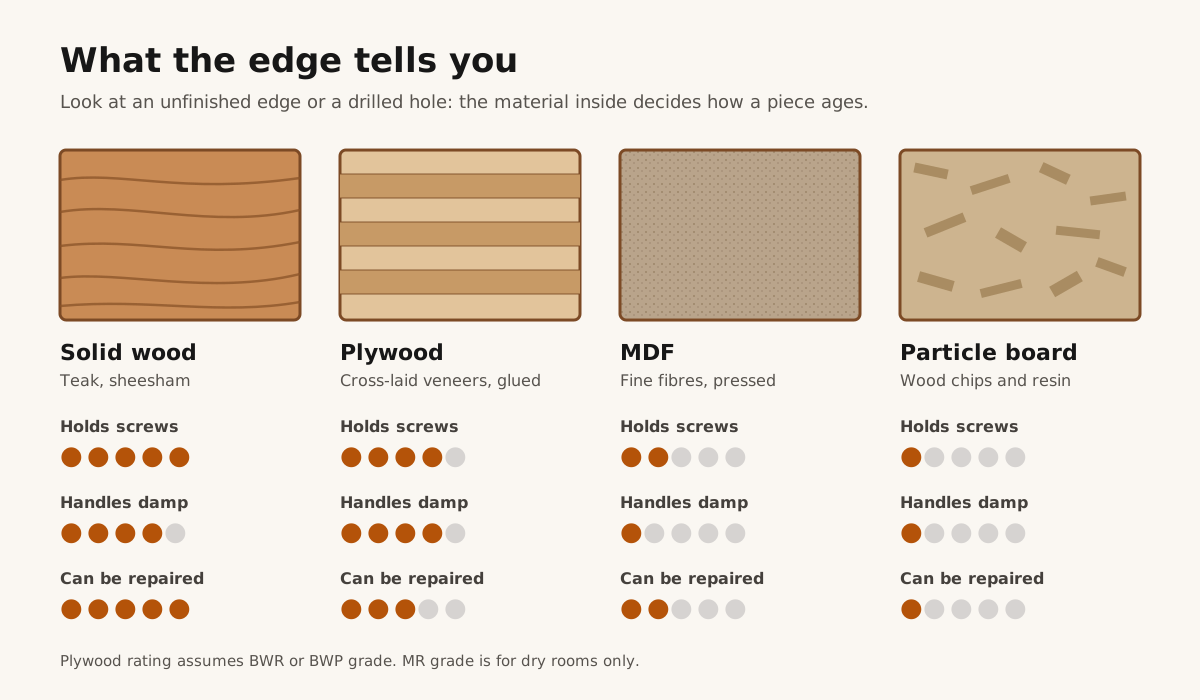
Plywood is made from thin sheets of wood veneer glued together with the grain of each layer at right angles to the next. That cross-layering is the point: it cancels out the natural tendency of wood to swell and shrink, so a sheet stays flat and stable in widths no solid board could manage.
That makes plywood the right choice for wardrobes, kitchen cabinets, TV units and bed storage boxes, where you need large, flat, stable panels. It is then faced with a decorative veneer or laminate.
In India, general-purpose plywood is certified under IS 303 and marine plywood under IS 710. In the shop, it is sold by grade:
- MR (moisture resistant). For dry interiors only: bedroom and living room furniture away from water.
- BWR (boiling water resistant). Uses water-resistant adhesives. A good default for kitchens and for any furniture in humid homes.
- BWP (boiling water proof, or marine). The highest grade. Use it under kitchen sinks, in bathrooms and anywhere wetting is likely.
Thickness matters too: around 18 to 19 mm for carcasses and shelves that carry load, 12 mm for lighter parts, and thinner sheets for backs and drawer bottoms. Ask whether the ply has been treated against borers and termites; manufacturers state this on the sheet.
What about MDF, HDHMR and particle board?
You will also be offered engineered boards:
- MDF is made from fine wood fibres pressed with resin. It machines cleanly and paints beautifully, which makes it popular for painted and routed shutters. It does not hold screws as well as plywood and swells badly if water gets in.
- HDHMR (high-density, high-moisture-resistance board) is a denser, more water-tolerant fibreboard that is increasingly used for kitchen shutters.
- Particle board is made from wood chips and resin. It is cheap and flat, which is why flat-pack furniture uses it, but it is weak at joints, sheds screws once damaged and crumbles when wet.
None of these is wrong in its place. They are wrong when they are sold as something they are not, or used where water will reach them.
Which material for which piece?
| Piece | A sensible choice | Why |
|---|---|---|
| Sofa frame | Seasoned hardwood such as sheesham | Takes the load and the racking forces of daily use |
| Dining table | Solid sheesham or teak, or veneered ply top | Solid wood can be sanded and refinished for decades |
| Bed | Solid wood frame, BWR ply storage box | Strength where it matters, stable panels for storage |
| Wardrobe | BWR plywood with laminate or veneer | Large flat doors and panels that must not warp |
| Modular kitchen | BWP under the sink, BWR or HDHMR elsewhere | Water is a daily fact in a kitchen |
| TV unit, bookshelves | Plywood with veneer or laminate | Long spans that must stay straight |
| Main door, balcony furniture | Teak | Weather, damp and termites |
Solid wood or veneer: how to tell what you are buying
Veneer is not a cheat; a good veneered panel is stable and beautiful. But you should know what you are paying for. Four quick checks:
- Look at the edges. Solid wood shows end grain at the ends of a board, and the grain pattern wraps around the edge. Veneered panels show a thin strip of edge banding or a line of layers.
- Compare the top and the underside. On solid wood the grain on both faces relates; on a veneered board the underside is often plain or a different wood.
- Look for repeats. A pattern that repeats exactly across several doors is usually printed laminate, not wood.
- Feel the weight. Solid sheesham and teak are heavy for their size.
Seasoning matters more than species
The best timber in the world will crack if it was not dried properly. Freshly sawn wood is full of water. As it dries it shrinks, and if that happens after the furniture is made, it happens inside your home: tabletops split, panels shrink away from frames and joints open.
Bhopal makes this worse than many cities, because the air swings from monsoon humidity to the dry heat of summer every year. Properly seasoned wood, air-dried for a long period or kiln-dried to a moisture level suited to the local climate, has already done most of its moving before it is cut.
Ask any furniture maker how their timber is seasoned and how long it has been in their store. A clear answer is a good sign.
Questions to ask before you order
- Which timber or board is used for each part: frame, panels, shelves, back, drawer bottoms?
- For solid wood: is it heartwood, and how was it seasoned?
- For plywood: which grade and thickness, and is it treated against borers and termites?
- What finish will be used, and how should I care for it?
- If something fails, can it be repaired?
Choosing materials with a maker
When furniture is made to order, you can choose the material part by part: solid sheesham where it shows and carries load, BWR plywood for the panels, BWP under the sink. That mix usually gives a better result, at a better price, than insisting on one material throughout.
Paridhi Furniture makes custom furniture in its MP Nagar workshop in Bhopal; visit the showroom to talk through the right material for each part of your piece. For ideas, see our dining and wardrobe and storage collections. Already own solid-wood furniture that has seen better days? Restoration may serve you better than replacing it.