
Short answer
To protect wooden furniture in the monsoon, move it 5 to 10 cm away from outer and bathroom walls, lift bases off wet-mopped floors, keep the finish waxed or polished, and use moisture absorbers inside wardrobes. Clean with a dry cloth, avoid plastic covers, and check skirting and legs for termite mud tubes after the first rains.
Key takeaways
- Damp walls and wet floors do more damage than humid air on its own.
- A sound polish or lacquer is the wood's raincoat; touch up bare patches before June.
- Mud tubes mean termites; tiny round holes and fine powder mean wood borer.
- Termites come from the building, so treating one piece of furniture is rarely enough.
For wooden furniture, the monsoon is the hardest season of the year. In Bhopal the rains usually arrive in late June and last into September, and for those three months the air stays heavy with moisture. Wood responds to that. Drawers stick, doors stop closing, a white haze appears on polished tops, wardrobes start to smell musty, and after the first heavy showers, termites come out looking for new ground.
The good news is that most monsoon damage is preventable, and most of the rest can be repaired. This guide covers what to do before, during and after the rains, and how to tell the two main insect problems apart.
What humidity does to wood
Wood is never completely dry. It constantly takes in moisture from the air and gives it back, settling at a level that matches its surroundings. When humidity rises, wood absorbs water and swells, mostly across the grain rather than along it. When the air dries out, it shrinks again.
That movement causes most of the problems people notice:
- Sticking drawers and doors as panels and rails swell into the gaps around them.
- Warped panels and tabletops when one face takes in more moisture than the other, for example a tabletop that is polished on top but bare underneath.
- Lifting veneer and laminate as the glue line weakens and the substrate swells.
- White marks and haze in the polish where moisture has been trapped in the finish.
- Mould and a musty smell in closed wardrobes, especially on the unfinished inside surfaces.
- Rusting hinges, runners and screws, which then stain the wood around them.
Then the dry season undoes it in reverse. Wood that swelled in August shrinks in April, and that is when cracks and open joints appear. Furniture made from well-seasoned timber with a sound finish on every face moves far less, which is why construction matters as much as care.
Before the monsoon: a checklist
Spend an afternoon in early June on these, and most of the season's problems never start:
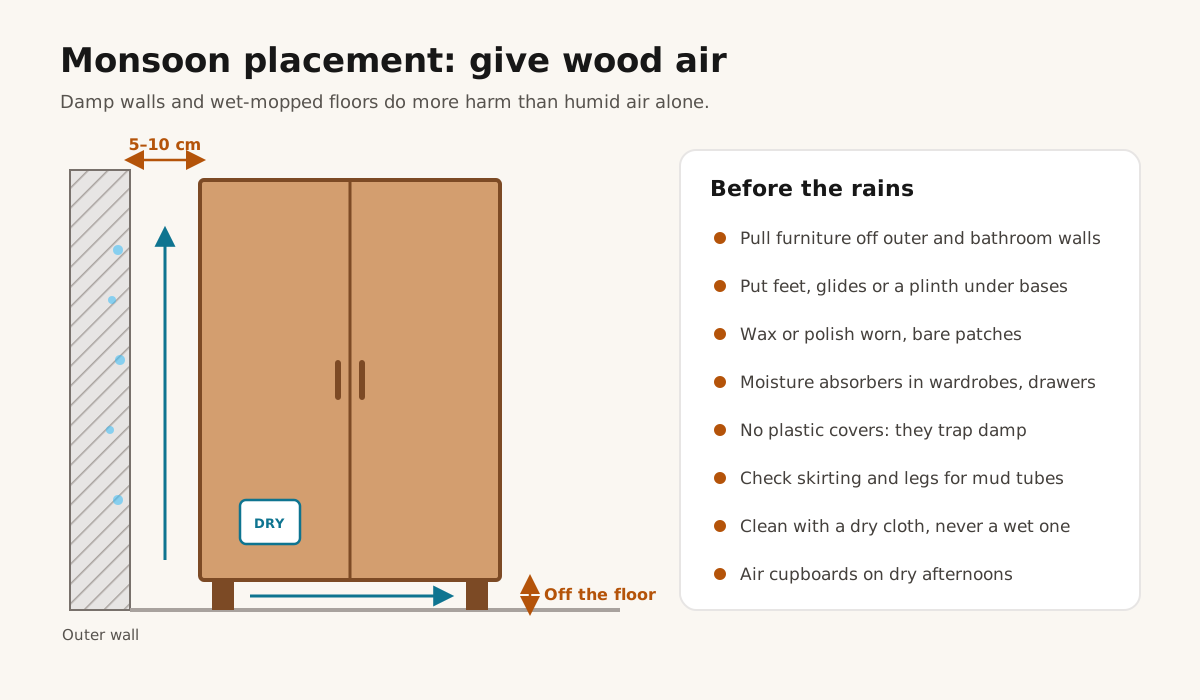
- Pull furniture away from outer walls and bathroom walls. These walls get damp in the rains. A gap of 5 to 10 cm lets air move behind wardrobes, beds and bookshelves and keeps damp from soaking into the back panel.
- Lift bases off the floor. Floors are mopped daily and stay wet for a while. Pieces that sit flat on the floor, such as beds with a solid base, plinth-mounted wardrobes and box units, soak up that water along their bottom edges. Fit feet, glides or plastic floor protectors.
- Look after the finish. Polish, lacquer and PU are the wood's raincoat. Wax or touch up worn, bare patches, especially on tabletops and the arms of chairs, before the rains, not during them.
- Put moisture absorbers inside wardrobes and drawers. Silica gel sachets or commercial moisture-absorber boxes take up damp air in closed spaces. Replace or dry them out when they are saturated.
- Move pieces away from windows and AC drain lines. Rain blown through a window or a dripping AC pipe will soak one spot repeatedly.
- Inspect for termites now. Check skirting, door frames and furniture legs for mud tubes before the swarming season, not after.
During the rains: everyday habits
- Clean with a dry cloth. A wet cloth adds water to wood that is already holding plenty. For sticky marks, use a barely damp cloth and dry the surface immediately.
- Ventilate when it isn't raining. Open windows and wardrobe doors on dry afternoons and let air move through. Fans help a great deal.
- Run the AC on dry mode if you have one. It removes moisture from the air as well as cooling it.
- Don't cover furniture in plastic. It traps humidity against the wood and is a reliable way to grow mould.
- Keep damp things out of wardrobes. Clothes that are not fully dry raise the humidity inside a closed cupboard sharply.
- Wipe spills straight away, and use coasters and mats on tables.
Many households also put camphor or dried neem leaves in wardrobes to deter insects. They are a pleasant habit, but they don't replace proper treatment if an infestation has already started.
Termites or wood borer? How to tell them apart
Two very different insects attack furniture in Indian homes, and they need different treatment. Knowing which one you have saves time and money.
| Sign | Termites (deemak) | Wood borer (ghun) |
|---|---|---|
| What you see | Thin mud tubes on walls, skirting or legs | Small round holes, 1 to 2 mm across |
| Debris | Soil packed into tunnels | Fine, flour-like powder below the holes |
| Where they come from | Soil and the building itself | Eggs laid in the wood |
| When you notice | Often after the first rains, when winged termites swarm | Any time; fresh powder means activity |
| Damage | Eats wood from inside, leaving a thin shell | Tunnels through wood, weakening it |
| Typical treatment | Professional treatment of the building, then the furniture | Inject treatment into holes, repeat, then refinish |
Termites live in colonies in the soil and travel into buildings through cracks, under floors and inside walls, building mud tubes to protect themselves from light and dry air. The winged termites that swarm around lights after the first monsoon showers are a sign that a colony is nearby.
Wood borers are beetle larvae that hatch inside the wood and tunnel through it for months before emerging through small round exit holes. They prefer sapwood and softer timbers.
What to do if you find termites
- Don't break open the mud tubes and spray random insecticide. It scatters the termites without reaching the colony.
- Move the affected piece away from the wall and check the pieces around it.
- Call a licensed pest-control service to treat the building. Termites come from the structure, so treating one wardrobe alone rarely solves the problem.
- Once the infestation is dealt with, assess the damage. Light damage can be cut out and replaced with matching wood. A carpenter can tell you whether the main frame is still sound.
- Refinish. New polish seals the repaired wood and makes fresh activity easy to spot.
What to do about wood borer
Borer damage is usually local to one piece. The standard approach is to inject a borer treatment into the exit holes and brush it over the bare surfaces, repeat after a few weeks to catch larvae that hatch later, then fill the holes and refinish. Watch for fresh powder over the next season; if it reappears, treat again. Badly tunnelled parts, often legs and lower rails, may need replacing.
After the monsoon: fixing the damage
Wait until October, when the air has dried and the wood has settled, before doing anything drastic.
- Sticking drawers and doors often free themselves as the wood shrinks. If they don't, a carpenter can ease them then. Planing during the monsoon leaves gaps in the dry season.
- White marks that haven't faded can be treated with a light cut-back and re-polish of the affected area.
- Mould should be cleaned off with a cloth and a mild cleaning solution, dried thoroughly in moving air, and the surface refinished. Unfinished inner surfaces benefit from a coat of sealer.
- Lifted veneer and laminate can be re-glued and pressed, as long as the board beneath hasn't swollen and crumbled.
- Rusted hardware should be replaced before the rust spreads into the wood.
Choosing furniture that copes with Bhopal's climate
If you're buying or commissioning furniture, a few choices make it far more monsoon-proof:
- Teak or well-seasoned hardwood for solid pieces; it moves less and resists decay and termites better.
- BWR or BWP plywood for carcasses in kitchens, bathrooms and humid rooms, never MR grade.
- A finish on every face, including the undersides of tabletops and the backs of panels, so moisture enters evenly.
- Edge-banding on all plywood edges, because exposed edges drink water.
- Feet, legs or a recessed plinth that keep the base off the floor.
Our guide to teak, sheesham and plywood covers those materials in more detail.
Furniture repair and polishing in Bhopal
If the monsoon has left swollen drawers, white marks, lifted veneer or insect damage, most of it can be put right. Paridhi Furniture repairs and repolishes wooden furniture from its workshop in MP Nagar, Bhopal; see what is involved on our furniture repair and restoration page. Planning something new for a damp corner of the house? Our custom furniture is built to the room it will stand in.